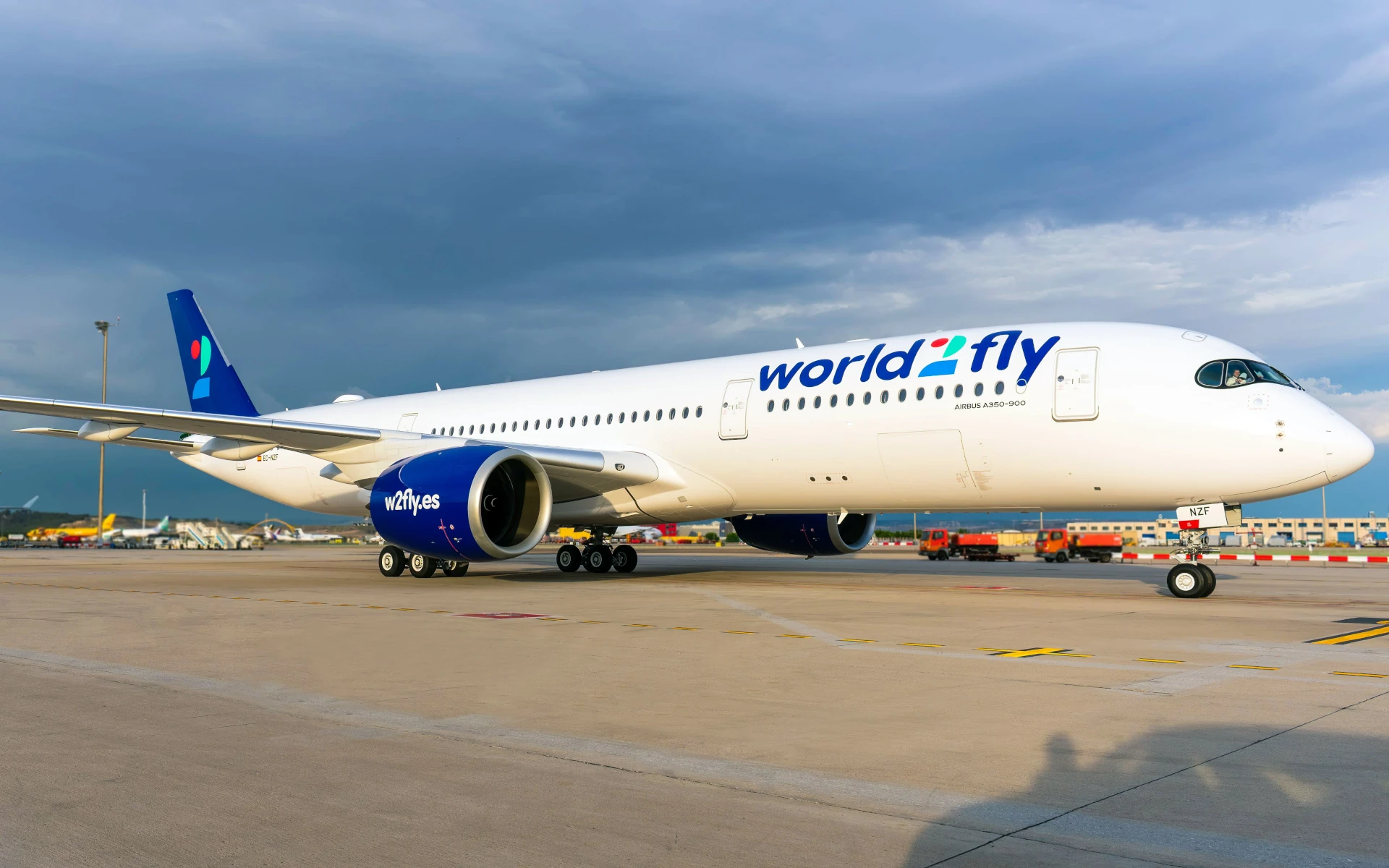
Five years flying further: World2Fly celebrates its anniversary connecting Europe, Latin America and the Caribbean
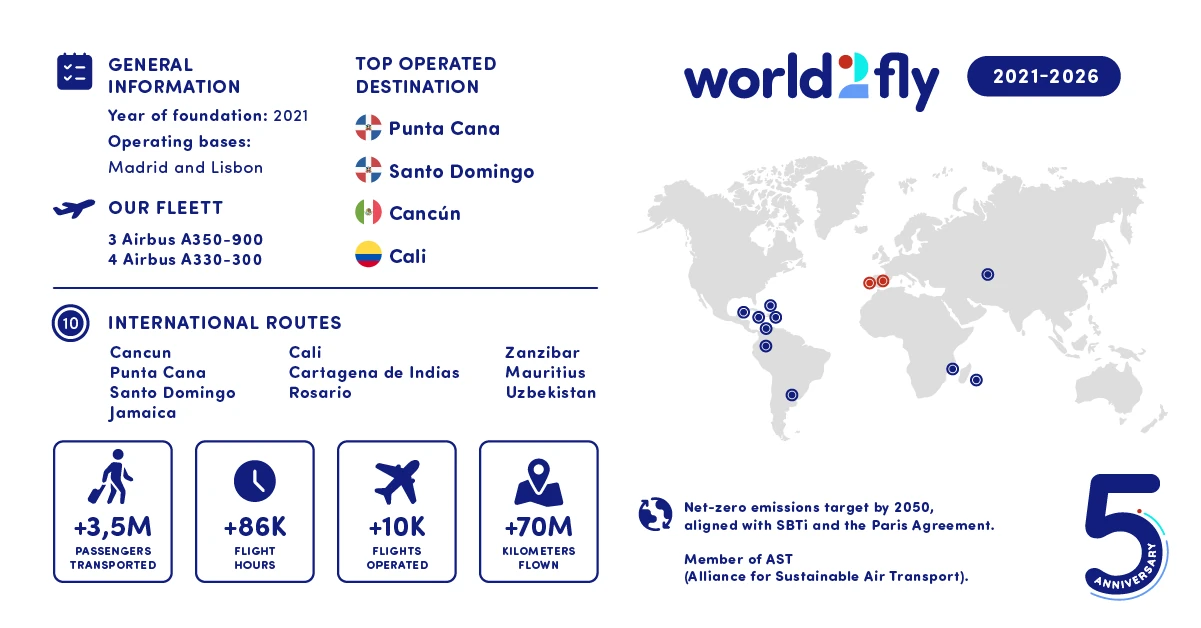
Five years after its first flight, World2Fly celebrates its anniversary as one of the key airlines for long-haul connections between Europe, Latin America and the Caribbean. Since the start of its operations, the company has carried more than 3.5 million passengers and operated 10,700 flights, figures that reflect its growth and its role in international connectivity.
- The World2Meet airline surpasses 3.5 million passengers carried and strengthens its presence on strategic routes such as Punta Cana, Cancun, Santo Domingo and Cali.
Over these five years, World2Fly has progressively expanded its destination network, bringing travellers closer to some of the most attractive holiday destinations in the Caribbean, Latin America, Africa and the Indian Ocean. The airline currently connects Madrid with Cancun, Punta Cana and Santo Domingo in the Caribbean; Cali, Cartagena de Indias and Rosario in Latin America; Mauritius and Zanzibar in Africa and the Indian Ocean; and Uzbekistan, expanding its offer towards Central Asia. From Lisbon, it operates flights to Cancun, Punta Cana, Jamaica and Zanzibar.
As part of this evolution, it is worth highlighting the new routes added during 2025, which will launch over the coming months. The connection between Madrid and Cartagena de Indias will begin on 3 July and will operate once a week, on Fridays, while the route between Madrid and Rosario will start on 1 October with two weekly flights, on Tuesdays and Thursdays.
Among the destinations with the highest demand are Cali, Cancun, Punta Cana and Santo Domingo, which account for the largest volumes of seats marketed by the airline. These results highlight the positive reception of World2Fly’s proposition among travellers and the appeal of a network that connects with some of the most sought-after holiday destinations.
These results are complemented by customer satisfaction and the perceived quality of service, which reinforce its commitment to the travel experience across all its long-haul operations.
In the words of Bruno Claeys, Managing Director of World2Fly: “Reaching five years of operations is a highly significant milestone for World2Fly. During this time, we have grown steadily, expanded our destination network and strengthened our operational capacity, always with the aim of connecting our passengers with long-haul destinations in an efficient and safe way, aligned with new ways of travelling. This anniversary invites us to look to the future with the ambition to continue improving our project, incorporating new opportunities and maintaining our focus on what defines us: innovation, excellence, safety and commitment to our passengers”.
World2Fly’s fleet consists of seven long-haul aircraft: three Airbus A350-900s and four Airbus A330-300s, a configuration that enables the airline to combine operational efficiency, reliability and onboard comfort.
As part of its commitment to sustainability, World2Fly is progressing along its roadmap towards decarbonisation, with the aim of reaching net zero emissions by 2050. This commitment is being developed in line with the criteria of the Science Based Targets initiative (SBTi) and the Paris Agreement. The airline is also a member of the TSA (Transport Sustainability Alliance), reinforcing its involvement in the transition towards a more responsible model.
Throughout its journey, the company has evolved its operational proposition with a focus on improving the travel experience, adapting to passengers’ new needs in the long-haul segment.
Since its creation, World2Fly has contributed to the development of World2Meet’s air travel proposition, driving connectivity with strategic destinations and supporting the group’s international growth. The airline begins this new stage with the aim of continuing to expand its destination network and adapting its operations to the sector’s standards of efficiency and quality.
You might also be interested in

World2Fly launches its new direct route between Madrid and Cartagena de Indias
World2Fly, the airline of the World2Meet group, has today launched its new direct route between Madrid and Cartagena de Indias, in Colombia, with the departure of the first flight marking the official start of operations between the two cities.

Icárion celebrates five years of growth alongside travel agencies
Five years after its first passenger set off on a journey, Icárion celebrates its anniversary having consolidated its position as World2Meet's long-haul travel brand and strengthened its role as a partner to travel agencies. Since its launch, the company has accompanied more than 110,000 travellers across 105 countries, figures that reflect the evolution of its proposition and its ability to adapt to the new needs of both travellers and the distribution channel.
Five years flying further: World2Fly celebrates its anniversary connecting Europe, Latin America and the Caribbean
Five years after its first flight, World2Fly celebrates its anniversary as one of the key airlines for long-haul connections between Europe, Latin America and the Caribbean. Since the start of its operations, the company has carried more than 3.5 million passengers and operated 10,700 flights, figures that reflect its growth and its role in international connectivity.